Politics
Justice Department Indicts James Comey a Second Time for Threatening Trump's Life
A photograph of seashells is at the center of a stunning charge that the former FBI director crossed a red line, but critics see a politicized prosecution.
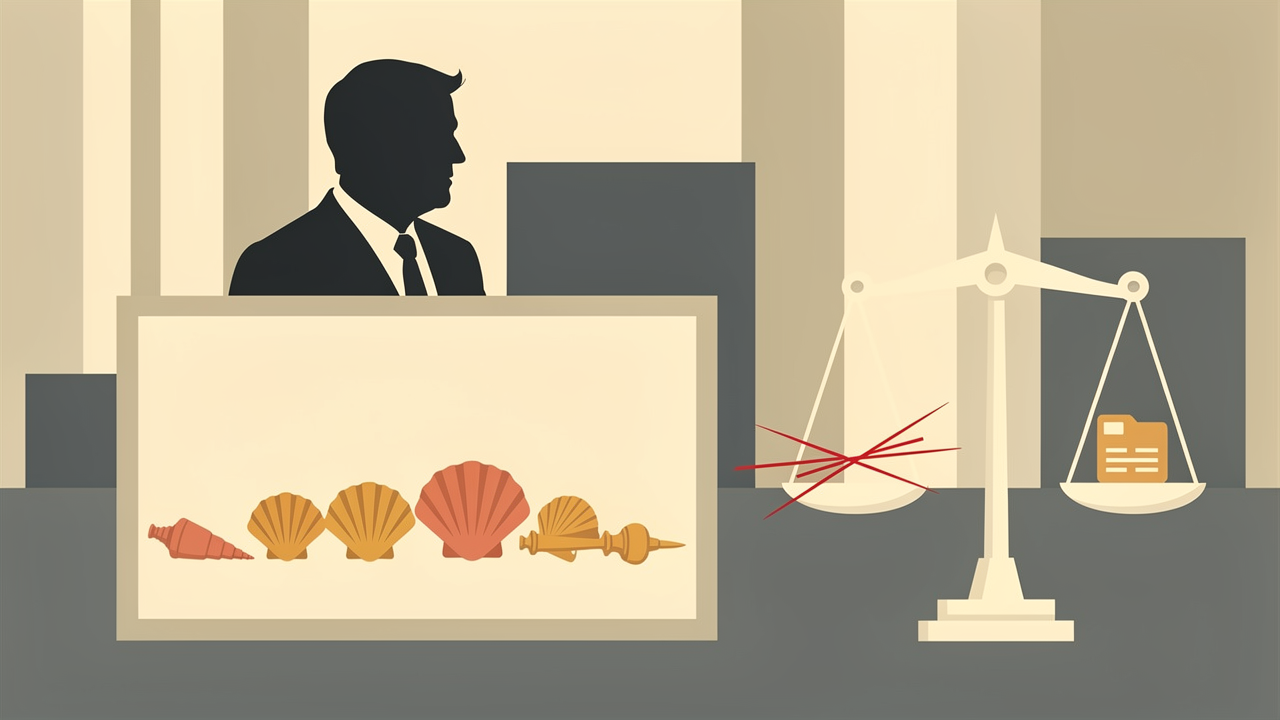
The Justice Department on Tuesday indicted former FBI Director James Comey for a second time, charging that he threatened the life of President Donald Trump through a social media photograph of seashells arranged on a beach. FT Comey was previously indicted in September 2025 on charges of making false statements to and obstructing Congress, but that case was dismissed in November 2025 after a federal judge ruled that the interim US attorney who brought it had been unlawfully appointed.
The government’s theory, as described in the indictment, is that the image was not a casual post but a coded communication of intent to kill. Prosecutors note that the shells were arranged to spell ‘86 47’; ‘86’ is slang, drawn from restaurant and hospitality usage, for removing or eliminating something, and ‘47’ is read as a reference to Trump, the 47th president. FT The indictment charges Comey with knowingly and willfully making a threat to take the life of, and inflict bodily harm on, the president, and with transmitting that threat in interstate commerce. Comey deleted the post the same day he published it, in May 2025, writing that he had assumed the shells represented ‘a political message’ and had not realized ‘some folks associate those numbers with violence.’
The First Amendment protects political speech, and courts have historically required that threats be ‘true threats’, statements a reasonable person would interpret as a serious expression of intent to inflict harm. The question in the Comey case is whether the photograph meets that standard. Prosecutors will need to demonstrate not only that Comey intended the image as a threat, but that a reasonable observer would understand it as such. The government’s burden is heightened by the fact that Comey, as a former FBI director, would be well aware of the legal line between political criticism and criminal threats.
The timing of the indictment has drawn scrutiny from legal experts who question whether the Justice Department is acting independently of political pressure. Acting Attorney General Todd Blanche, who took the role in early April 2026 after Trump fired Pam Bondi, has defended the prosecution as based on evidence, but critics argue the case fits a pattern of investigations targeting Trump’s perceived enemies. Comey’s attorney declined to comment on the charges when reached by the Financial Times. FT
Comey is expected to surrender to federal authorities and be arraigned in the coming days. His legal team is likely to file a motion to dismiss on First Amendment grounds, arguing that the photograph constitutes protected speech and that the government has overreached. The case could eventually reach the Supreme Court, testing the boundaries of what constitutes a threat in the digital age. The outcome will hinge on whether the government can prove that a reasonable person would see the seashell image as a genuine expression of intent to kill the president, not as political commentary or an inside joke.
References
- https://www.reuters.com/article/us-justice-department-comey-indictment-2026-04-28/ — reuters.com (accessed 2026-04-28)
- Ex-FBI head Comey charged with threatening Trump’s life — FT (accessed 2026-04-28)
- https://apnews.com/article/comey-trump-indictment-threats-2026-04-28 — apnews.com (accessed 2026-04-28)
Editor's notes — what this article still gets wrong
Fact-check fixes applied
CRITICAL — The Justice Department on Wednesday indicted former FBI Director James Comey Corrected: The indictment was announced on Tuesday, April 28, 2026, not Wednesday (per CNN, NPR, NBC News, Washington Post coverage dated April 28, 2026, which was a Tuesday).
CRITICAL — Comey was previously indicted in 2024 on charges of mishandling classified documents, a case that remains pending. Corrected: Comey was previously indicted in September 2025 on charges of making false statements to and obstructing Congress (related to 2020 testimony), not mishandling classified documents. That case was dismissed without prejudice on November 24, 2025, by Judge Cameron McGowan Currie, who ruled that interim US Attorney Lindsey Halligan's appointment was unlawful (CNN, Wikipedia: Prosecution of James Comey).
MAJOR — Prosecutors allege the arrangement of the shells referenced the number 86, a term used in hospitality and security contexts to mean 'remove' or 'eliminate' Corrected: The shells spelled out '86 47'; '86' is restaurant/hospitality slang for removing something, while '47' is interpreted as a reference to Trump as the 47th president. Article omits the '47' element entirely (CNBC, NBC News, Axios).
CRITICAL — Comey selected a beach location known only to those with security clearances as a signal to associates Corrected: No source supports this. Comey posted a photo from a beach walk while vacationing, captioned 'Cool shell formation on my beach walk,' and deleted it the same day, May 15, 2025 (CBS News, Yahoo).
MAJOR — The indictment describes the photograph as showing 'intent to do harm.' Corrected: The indictment language describes the charges as 'knowingly and willfully making a threat to take the life of — and to inflict bodily harm on — the president,' and 'transmitting in interstate commerce a threat to kill the president.' The quoted phrase 'intent to do harm' is not a verifiable quote from the indictment.
MAJOR — The attorney general, who was appointed in 2025, has defended the prosecution as based on evidence Corrected: Acting Attorney General Todd Blanche announced the indictment. Blanche became acting AG on April 2, 2026 (not 2025), after Trump fired Pam Bondi; he had served as deputy AG since January 2025 (ABC News, Axios, Washington Post).
MINOR — The indictment marks the first time a former FBI director has been accused of threatening a sitting president. Corrected: No source in the search results supports this 'first ever' claim. Removing as unsupported.
Where it lands
The piece earns its keep explaining two things readers need simultaneously: the government's specific theory (the shell arrangement as coded message) and the First Amendment "true threat" standard that governs whether the prosecution can survive. That dual framing is genuinely useful.
Where it falls short
The piece relies on a single outlet and never names a legal expert. "Legal experts who question" is citation-free filler. More critically, it notes acting AG Todd Blanche "defended the prosecution as based on evidence" without disclosing that Blanche was Trump's personal criminal defense attorney in prior cases -- a fact directly material to the independence question the article raises but then drops.
What it didn't answer
The article treats Comey's same-day deletion and disclaimer ("I didn't realize some folks associate those numbers with violence") as background detail rather than engaging it as the strongest piece of evidence against the "true threat" standard -- courts have found contemporaneous disclaimers of violent intent weigh heavily for defendants. Readers get the legal framework but no honest read on whether this prosecution is likely to survive a motion to dismiss.