Tech
Big Tech's AI Capex Hits a Breaking Point, Earnings Season Will Test the Narrative
After a year of record spending, markets are demanding proof that AI investment is paying off. Four mega-cap earnings reports today could define the next phase.
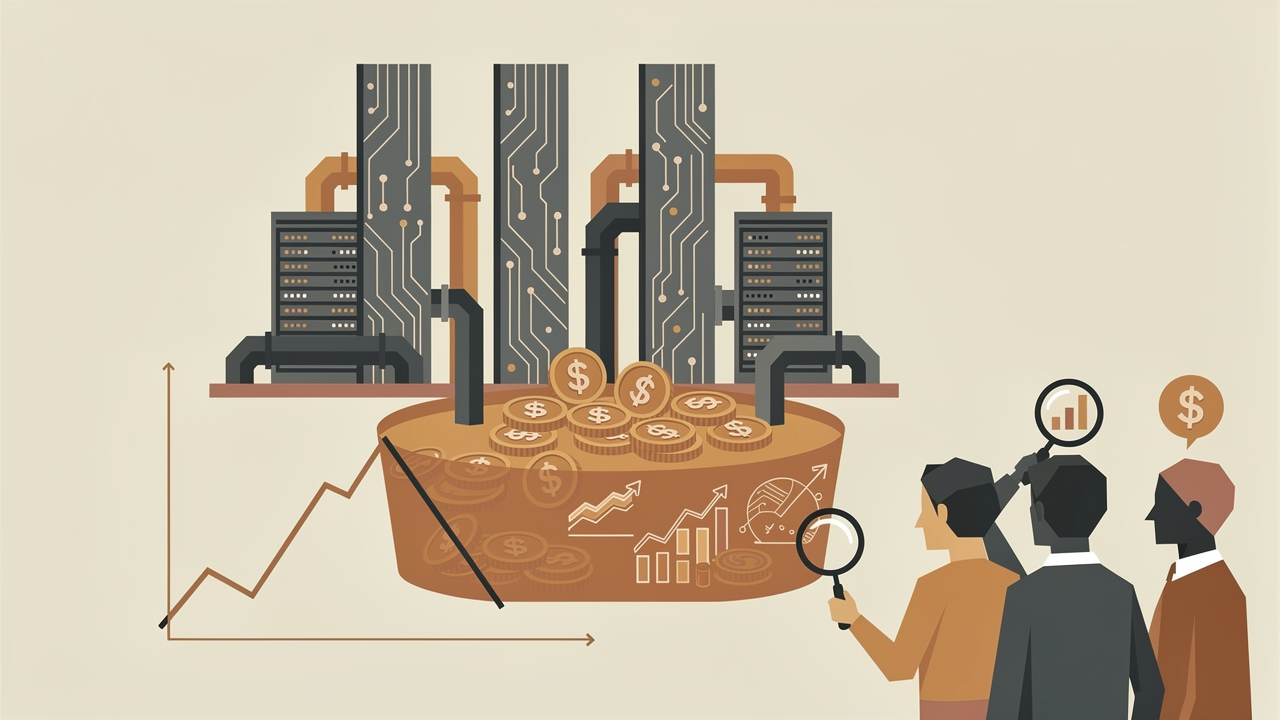
Microsoft, Amazon, Alphabet, and Meta report earnings today after a year of record spending. The four companies spent roughly $364 billion combined in their 2025 fiscal years on AI infrastructure, with hyperscaler capex projected to exceed $600 billion in 2026. The market has priced in a return on that investment. It has not shown one yet.
Today’s earnings reports, on what Bloomberg is calling “All-In Wednesday,” will test whether that capital can generate proportional revenue. Every major tech investor is long. The margin for error is razor thin.
The Capacity Ceiling
The central tension in the AI narrative has always been one of timing. For two years, Microsoft, Amazon, Alphabet, and Meta have spent tens of billions building data centers and acquiring GPUs on the assumption that demand for AI services would eventually justify the investment. The market gave them the benefit of the doubt. Share prices rose on the promise of future returns.
That patience is wearing thin. According to Bloomberg Open Interest, TD Cowen senior equity research analyst John Blackledge argues that Big Tech’s AI capital expenditure may have “reached a critical limit.” The phrase matters because Blackledge is a sell-side analyst covering the sector. His warning signals that the buildout phase, characterized by breakneck spending on infrastructure, may be giving way to a consolidation phase where investors demand to see actual revenue and profit from those investments.
This shift matters because the spending itself has become a circular justification: high capex signaled confidence in AI, which buoyed AI-adjacent stocks, which justified more spending. If the market stops rewarding spending for its own sake, that feedback loop breaks. AWS and Google Cloud growth will be the key indicators. If cloud revenue is not accelerating meaningfully alongside AI infrastructure spending, the thesis weakens.
The Revenue Reality
Nowhere is this tension more visible than in the relationship between Microsoft and OpenAI. Microsoft invested billions into OpenAI and integrated its models into products like Copilot and Azure. OpenAI has reportedly missed internal revenue targets. The partnership has shown cracks. Bloomberg’s coverage of these dynamics underscores the question: can the spending generate the returns that the market has already priced in?
This is the test the earnings reports will answer. Microsoft’s Q3 FY2026 consensus sits at approximately $4.06 EPS on $81.43 billion in revenue, with company guidance of $80.65 billion to $81.75 billion. Meta’s Q1 2026 consensus is roughly $6.67 EPS on $55.4 billion in revenue. For Amazon, Q1 2026 consensus is approximately $1.63 EPS on $177.28 billion in revenue. Alphabet is expected to report around $2.63 to $2.68 EPS on $106.89 billion in revenue. These numbers will be parsed alongside capital expenditure guidance, cloud revenue growth, and any commentary about the partnership landscape, particularly regarding OpenAI.
The Unforgiving Setup
The current market environment is unforgiving for any company that disappoints. Bloomberg notes that with sky-high expectations, even a small miss could trigger another selloff. When every investor is already betting on good news, there is no one left to be convinced. The only direction to move is down.
This is the structural risk. The S&P 500’s recent gains are heavily concentrated in a handful of mega-cap tech stocks, each priced for near-perfection. If any of today’s earnings reports reveal slowing cloud growth, a capex ramp that is not generating proportionally higher revenue, or tensions in key partnerships, the sell-off could be swift and broad.
The Data Points That Matter
Today’s earnings will be parsed for more than just revenue and EPS. The trajectory of capital expenditure guidance will show whether the peak has passed or is still ahead. Cloud revenue growth at AWS and Google Cloud will serve as the closest proxy for whether AI services are actually driving demand. Meta’s Reality Labs spending, the most aggressive proportional bet in the industry, will face particular scrutiny. Any commentary about Microsoft-OpenAI dynamics will be read for signs of further fracture.
The answer to whether the spending is working will not appear in a single quarter’s results. But the direction of travel will become clear. The buildout was funded by faith. The revenue phase requires proof.
References
- ‘All-In Wednesday’ to Test Stock Market Where Everyone’s Long — Bloomberg (accessed 2026-04-29)
- https://www.wsj.com/tech/ai/ai-worries-have-returned-to-wall-street-now-come-earnings-d680e19c — wsj.com (accessed 2026-04-29)
- Big Tech Capex Hits Critical Limit — Bloomberg (accessed 2026-04-29)
Editor's notes — what this article still gets wrong
Where it lands
The "circular justification" passage in the Capacity Ceiling section is the piece's real intellectual contribution -- the idea that capex signaled confidence, which buoyed stocks, which justified more capex. That feedback loop framing is sharper than the standard "will AI pay off?" setup.
Where it falls short
The OpenAI revenue-target miss is presented as fact ("has reportedly missed internal revenue targets") with no source attached -- not even a "according to" attribution. That claim needs a citation or a hedge. The consensus EPS figures also float free of any sourcing; readers cannot verify which estimate provider they came from or how fresh they are.
What it didn't answer
The entire article assumes the skeptical case is the interesting one. It never engages the strongest counterargument: that hyperscaler returns on AI infrastructure have historically lagged the buildout by 18-24 months, and that 2026 earnings are structurally too early to be a verdict. A reader who believes the bulls have a defensible timeline will finish this piece unconvinced rather than persuaded -- because the piece never tried to persuade them.