Markets
First LNG Shipment Exits Hormuz as Iran Peace Talks Gain Traction
A potential re-opening of the strait and BlackRock's 'higher-for-longer' bond thesis signal a turning point in the Iran war's economic fallout.
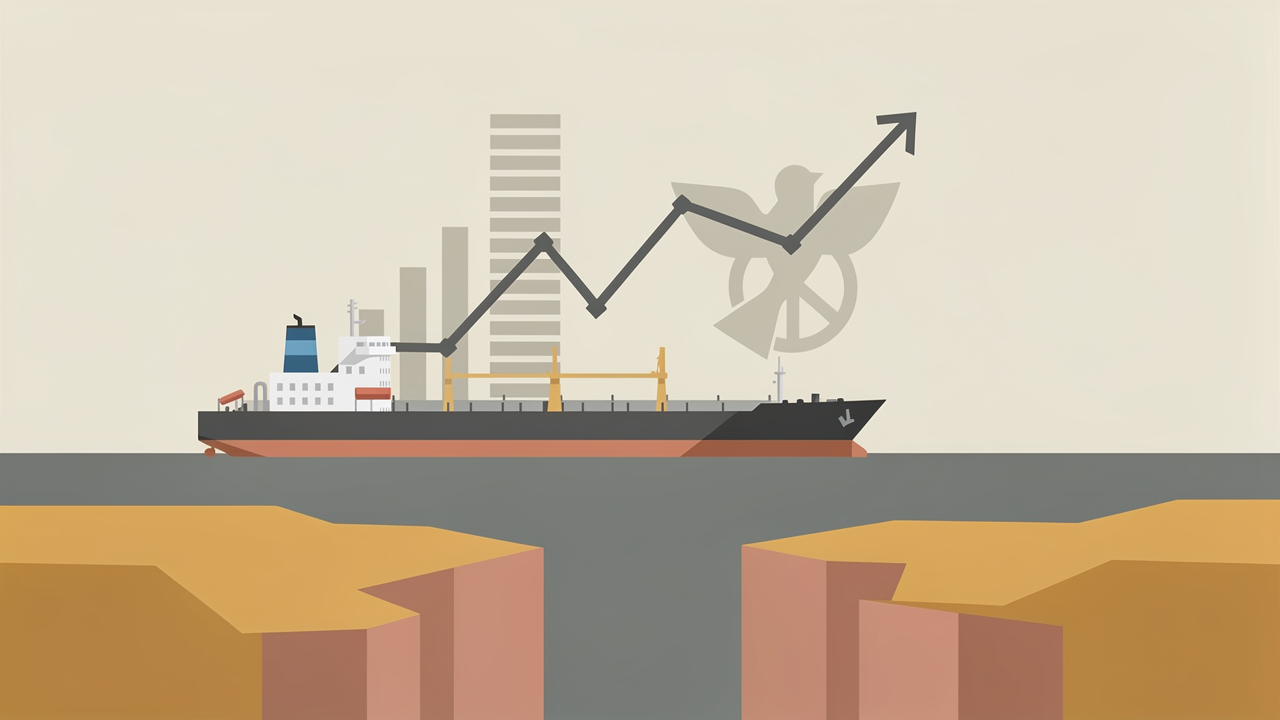
The tanker’s automatic identification system registered it steaming south through the Strait of Hormuz at 10 knots just after midnight local time on April 28. For the first time in two months, a liquefied natural gas carrier had made it out of the Persian Gulf. The [Bloomberg report that broke the news carried the quiet force of an economic earthquake: the strait that carries roughly 20% of the world’s LNG was, at least for one ship, open again.
The Al Khor’s passage comes as the U.S. considers a proposal from Tehran that could lead to a de-escalation of the two-month-old war. [Oil markets are absorbing the news that diplomatic channels are active. Meanwhile, BlackRock Investment Institute has declared that the war-driven inflation regime is now structural, arguing that [government bond yields will stay elevated for the foreseeable future. For investors, the conjunction of these three signals points to a world that has already changed, even if peace talks succeed.
The Al Khor is a Qatari-flagged LNG carrier. Its departure from the Persian Gulf was not announced by any government. The only evidence was the vessel’s Automatic Identification System data, showing it transiting through the strait’s shipping lane, a corridor that had been effectively closed since late February, when the conflict began [Bloomberg].
The significance extends beyond the single cargo. A Qatari LNG tanker moving through Hormuz suggests that some form of deconfliction arrangement has been implemented, possibly involving third-party inspections or guaranteed safe passage for certain flagged vessels. The Bloomberg report notes that the tanker appears to have exited the gulf based on its AIS track, but has not confirmed its destination or whether it is carrying cargo [Bloomberg]. Even with those caveats, the symbolism is powerful. Qatar is one of the world’s largest LNG exporters, and the fact that a Qatari vessel was the first to test the strait’s reopening suggests that diplomatic back-channels between Doha and Tehran, which remained open even during the hottest phase of the war, have been activated.
While the LNG news broke, oil traders were grappling with a very different signal. [Crude prices edged higher on April 28 as the market absorbed the news that the U.S. is discussing a proposal from Tehran. The move was modest, Brent added 1.2% to settle near $92, but the volatility beneath the surface tells a more complicated story [Bloomberg].
The OVX, a measure of expected oil price swings, has remained elevated for most of April, a level typically associated with wartime uncertainty. Options markets show that traders are positioning for a wide range of outcomes, from a sharp drop to a significant spike, with little conviction in between. This bimodal distribution reflects the genuine uncertainty around the diplomatic track. If the strait fully reopens, the supply shock that added $20 to $30 per barrel could reverse within weeks. If talks collapse, the market faces the prospect of a prolonged closure that could push prices well above $100 and trigger coordinated releases from the Strategic Petroleum Reserve.
The U.S. proposal, details of which remain closely held, is reportedly a phased framework that would begin with a ceasefire and the removal of naval mines, followed by negotiations on Iran’s nuclear program and regional military posture [Bloomberg]. The critical question for oil markets is whether Iran will accept terms that effectively end its ability to threaten the strait in the future, or whether any deal includes face-saving language that preserves its claim to be able to close the waterway.
The most significant investment call of the week came not from a government or an oil company, but from the investment institute of the world’s largest asset manager. [BlackRock’s thesis is simple: war-induced inflation is not transitory. The firm’s analysts argue that the disruption to energy supply chains, the re-routing of global trade, and the military spending required to maintain the conflict have all created structural price pressures that will persist even if peace is restored in the coming months.
The 10-year U.S. Treasury yield has already risen from 3.8% before the war to 4.6% today [Bloomberg], a move that has punished bondholders and raised borrowing costs for the federal government. BlackRock’s call suggests that the yield could stay in the 4.5% to 5.0% range for the next 12 to 18 months, potentially punching a hole in the fiscal arithmetic that underpins current spending plans. This is a significant departure from the consensus view, which held that the Iran war was a temporary supply shock that would fade once diplomatic solutions emerged. BlackRock is essentially saying that the war has changed the inflation regime permanently, because it has exposed the vulnerability of global energy infrastructure to geopolitical risk, and that risk premium will remain priced into everything from natural gas contracts to sovereign debt.
The BlackRock call also carries implications for the Federal Reserve. If inflation remains elevated due to structural factors (higher energy costs, reshoring premiums, and defense spending), the central bank cannot simply wait for the data to improve. It faces the prospect of having to raise rates further into a slowing economy, a dilemma that the bond market has only begun to price.
A note of caution is warranted. BlackRock manages trillions in fixed income, and a “higher for longer” call on yields benefits the short-duration strategies the firm sells. The thesis also ignores that asset managers have called nearly every supply shock “structural” in the past decade, and most were wrong. The bond market has not fully capitulated to the BlackRock view: the 10-year yield at 4.6% is below the 5.0% level that many economists have argued is the “neutral” rate in a war-inflation scenario, and the market for inflation-protected securities shows breakeven inflation expectations at 2.8%, above the Fed’s target but hardly a re-run of the 1970s.
The situation bears comparison to two previous episodes. The first is the 1973 Arab oil embargo, when geopolitical closure of energy routes created a supply shock that took years to unwind and changed the macroeconomic regime. The second is the 2019 attacks on Saudi Aramco’s Abqaiq facility, when a temporary disruption caused a one-day spike in oil prices that faded within weeks. The range of outcomes is wide, and which precedent applies depends on whether the Iran war shifts the global energy order or merely disrupts it. What differentiates today is the degree of forward guidance from the world’s largest asset manager. In 1973, the structural nature of the shock became apparent only in retrospect. In 2019, the temporary nature of the shock was clear within days.
The front-month Brent crude futures curve for delivery six months out is trading at $88, and for 12 months out at $82. This backwardation, where immediate delivery is more expensive than future delivery, is typical of supply shocks that are expected to be resolved. But backwardation can also reflect near-term hoarding, not just expected supply resolution. The BlackRock thesis suggests that even after the shock resolves, the world will face a permanently higher cost of capital, which should push the entire curve upward, not downward.
The U.S. decision to engage with the Iranian proposal is a recognition that the war has reached a stalemate costly to both sides. For Iran, the cost is severe: the country’s oil exports have collapsed from roughly 1.5 million barrels per day to near zero, as the naval blockade has prevented tankers from loading at Iranian terminals, and the rial has lost 40% of its value since the war began, with inflation running at over 50%. The regime is under internal pressure to end the conflict, even if doing so means accepting terms that curtail its ability to threaten the strait. The diplomatic window is narrow. Both sides face domestic constituencies that view compromise as defeat.
Who is negotiating on the U.S. side remains unclear. The [Bloomberg report cites a “U.S. official” without further identification, and the channel of communication with Tehran is undisclosed. This vagueness is itself a signal: the administration is keeping its cards close, possibly to preserve deniability if talks fail.
What happens next depends on whether the Al Khor is followed by other vessels. If a steady flow of LNG carriers begins transiting Hormuz in the coming days, the diplomatic track is likely real. If the strait closes again, the war economy enters a new, more expensive phase. The BlackRock thesis will be tested either way: peace will show whether yields fall back to pre-war levels or stay structurally higher. Investors should watch not only the oil price but the bond market’s reaction to each diplomatic development. The first LNG shipment out of Hormuz is a slender thread of hope, but the war’s economic legacy will long outlast whatever peace deal emerges.
References
- First LNG Shipment Since War Began Appears to Exit Hormuz — Bloomberg (accessed 2026-04-29)
- BlackRock Says Higher Government Bond Yields Are Here to Stay — Bloomberg (accessed 2026-04-29)
- Oil Climbs as US Weighs Iran Proposal With Hormuz Still Shut — Bloomberg (accessed 2026-04-29)
Editor's notes — what this article still gets wrong
Where it lands
The backwardation analysis in the futures section is genuinely good work. The piece correctly identifies that backwardation can reflect near-term hoarding rather than expected supply resolution, which is a real analytical distinction that most financial journalism skips. The self-skeptical paragraph on BlackRock's conflict of interest is also honest and earns trust.
Where it falls short
The Iran economic figures (rial down 40%, inflation at 50%, exports near zero) appear with no sourcing. They may be accurate, but they are doing significant argumentative work and a reader cannot verify them. The piece also asserts a "Doha-Tehran back-channel" as though it is established fact, when the sourcing only supports the inference that a Qatari vessel passed through. That is a meaningful gap between evidence and claim.
What it didn't answer
The piece never addresses what the U.S. gains strategically from a negotiated settlement versus continued pressure. The framing treats American engagement as a response to stalemate, but a reader could reasonably ask whether Washington has reasons to prefer a prolonged closure, and that counter-argument gets no space.