Markets
Gold, Oil, and the 'Curious Exuberance': Why Markets Are Looking Past the Iran War—for Now
Equities have shrugged off geopolitical risk, but traders are watching for the moment the Hormuz crisis hits earnings.
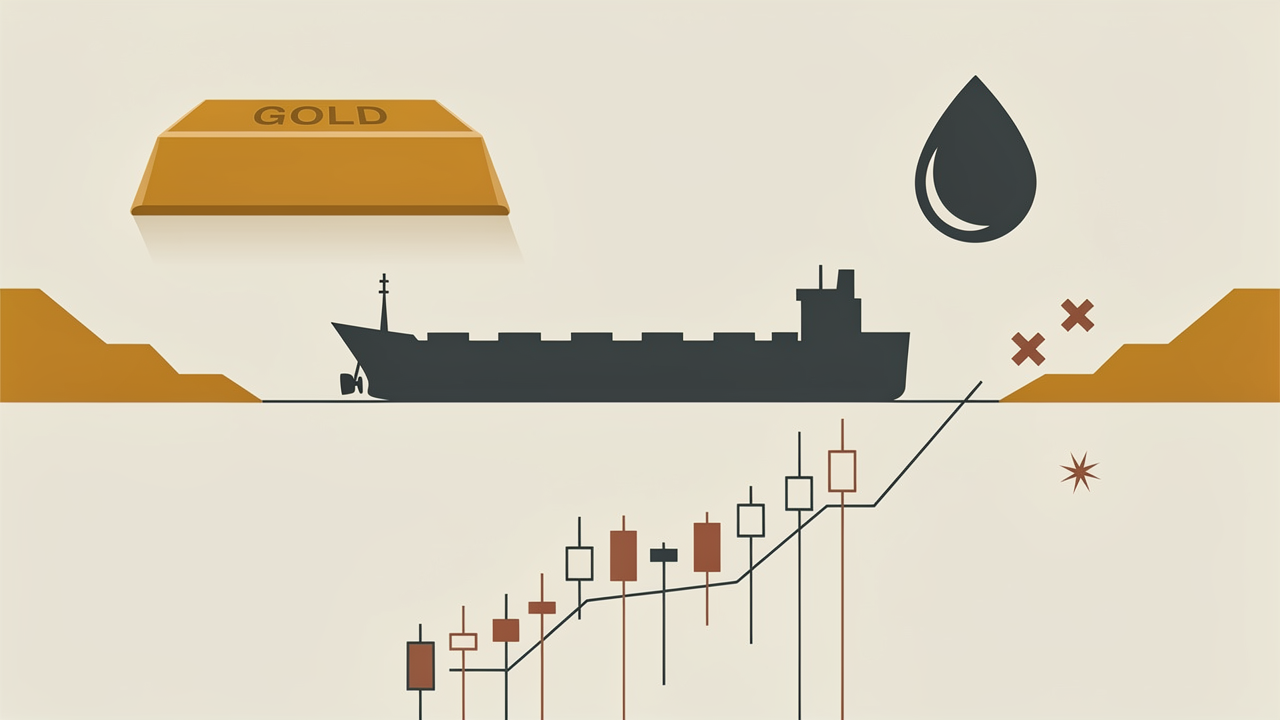
The MSCI Emerging Markets Index hit a record high on Monday, reclaiming its pre-war peak even as Brent crude pushed toward $95 a barrel and the Strait of Hormuz remained effectively closed 3. The divergence has a name: “curious exuberance,” borrowed from a Bloomberg headline that captured the mood of traders who are betting that the war is containable or that its supply chain disruptions will be fleeting 2.
The primary engine of the rally is artificial intelligence. Fresh earnings beats from major chipmakers and cloud providers have given investors a reason to look past the Middle East conflict, as the AI trade has become a “safe haven” of its own, an asset class that feels decoupled from the oil price spike 2. A second factor supporting equities is hope for a diplomatic resolution that would reopen the strait before the crisis inflicts lasting economic damage 3.
It is possible the bullish case is correct. The Strait of Hormuz has been threatened repeatedly in 2011, 2019, and 2024, and each time traffic resumed within weeks. Oil at $95 is not historically catastrophic, and AI capital expenditure is largely dollar-denominated and concentrated in US and Taiwanese supply chains that have not yet been disrupted. The rally also tracks a weaker dollar, which helps emerging-market equities by easing debt service costs and attracting foreign capital. An analytical reader would note that markets have shrugged off geopolitical shocks before and been rewarded.
But there are warning signs. Commodity markets have not shrugged off the war, and the divergence between stocks and physical assets is a signal that risk premia may be misaligned 2. One of the clearest examples of the real-world impact is in Vietnam. State-owned PetroVietnam Gas JSC plans to import more liquefied petroleum gas from the US than from its traditional Middle East suppliers next month, a shift that reflects the supply chain reordering now underway 1. Vietnam is paying a premium for US-sourced LPG to hedge against future disruptions, but those higher input costs will eventually show up in corporate earnings for manufacturers from plastics to fertilizers 1.
The AI boom is predicated on enduring capital expenditure and global supply chains that function smoothly. Those supply chains are now under direct threat. Taiwan, the semiconductor manufacturing hub, depends on energy imports that traverse the same waters as Iranian oil. A prolonged Hormuz closure would raise shipping costs and delay shipments for every industry. But the AI trade is a long-duration story, and investors may be betting that the US tech sector’s domestic revenue base and dollar earnings shield it from the worst of the disruption.
The most immediate risk is that diplomatic talks fail. If the US and Iran cannot reach a framework agreement in the coming weeks, the Strait will remain shuttered. Emerging markets would be hit hardest, particularly the large importers of Middle Eastern crude. The current AI-led rally in emerging stocks looks exposed, since much of it is concentrated in a handful of tech-heavy sectors that are not insulated from energy costs.
Vietnam’s LPG pivot shows that companies are preparing for a world in which the Hormuz closure is not temporary. Rerouting supply chains takes months and comes with a price tag that earnings reports have not yet reflected. The moment that price tag hits the bottom line will test whether the “curious exuberance” was prescience or denial.
References
- Emerging Stocks Reclaim Pre-War Peak on AI, Hormuz Deal Hopes — Bloomberg (accessed 2026-04-29)
- The Stock Market’s 'Curious Exuberance' Despite the Iran War — Bloomberg (accessed 2026-04-29)
- Vietnam Gas Major Looks to US as Iran War Reorders LPG Flows — Bloomberg (accessed 2026-04-29)
Editor's notes — what this article still gets wrong
Where it lands
The Vietnam LPG anecdote is doing real work. It's a concrete, sourced example of supply-chain reordering that grounds an argument otherwise built on market vibes, and the piece is right to lean on it as the strongest evidence that the "exuberance" may be premature.
Where it falls short
The article leans on three Bloomberg pieces from a single day and treats them as sufficient to characterize a market regime. There's no inflation data, no central bank reaction, no shipping or insurance rate figures, and no equity flow numbers beyond the index level itself. Several confident claims, that the rally tracks a weaker dollar, that AI capex is "largely dollar-denominated," that prior Hormuz threats resolved "within weeks", are asserted without citation and at least one (the 2024 reference) deserves a source.
What it didn't answer
The piece never asks the obvious question: if the Strait is "effectively closed," why is Brent only at $95 rather than $130-plus? Either the closure is less complete than stated, strategic reserves are being drawn down, or the market expects rapid resolution. Engaging that tension would have sharpened the whole argument rather than leaving "curious exuberance" as the explanation.