Politics
Supreme Court Guts Key Provision of Voting Rights Act in Landmark Redistricting Decision
In a 6, 3 ruling, the justices sharply limited the use of race when drawing electoral maps, making it harder to challenge maps that dilute minority voting power.
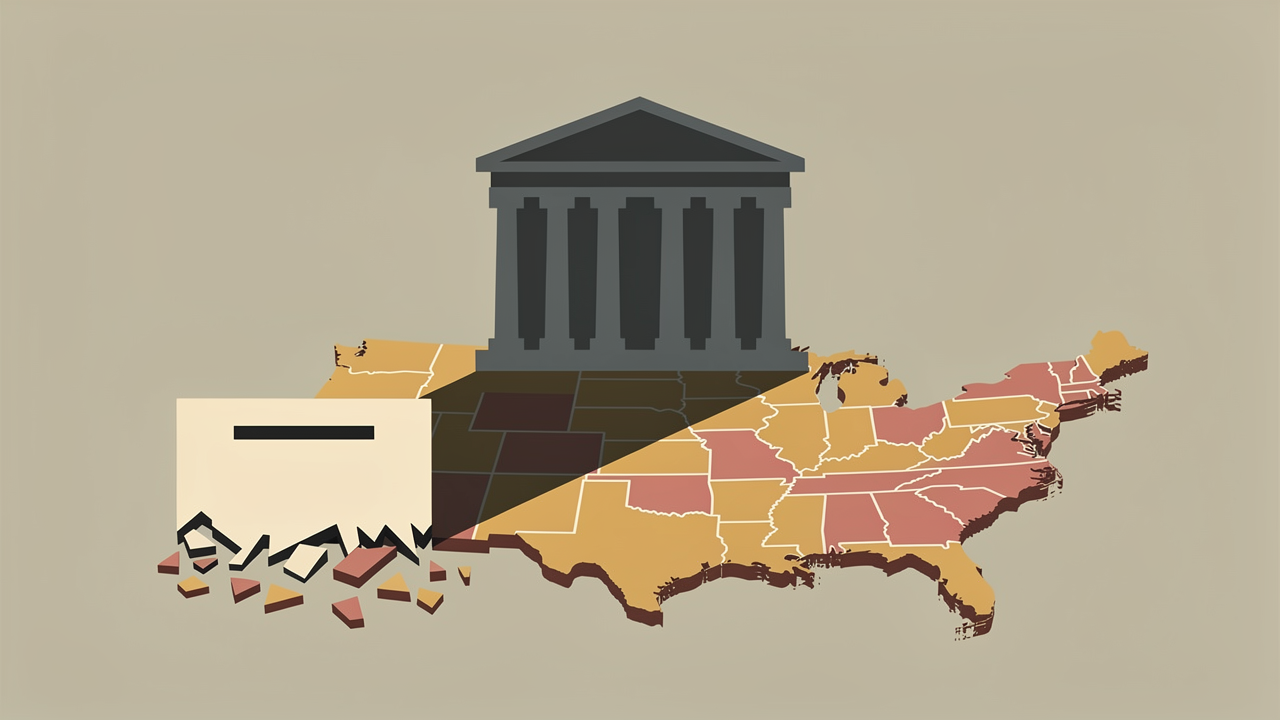
The Supreme Court on May 23, 2024, ruled 6-3 that a lower court erred in finding South Carolina’s congressional map was an unconstitutional racial gerrymander. In Alexander v. South Carolina State Conference of the NAACP, the justices held that the challengers failed to prove that race, rather than partisan politics, drove the map’s design[Reuters, May 23, 2024]. The decision did not change the standard for vote dilution claims under Section 2 of the Voting Rights Act, which remains governed by the 1986 Thornburg v. Gingles precedent[AP News, May 23, 2024].
The case arose from South Carolina’s 2021 redistricting process, when the Republican-controlled legislature moved approximately 30,000 Black voters out of the state’s 1st Congressional District. Challengers argued this packed Black voters into a neighboring district and diluted their influence in the coastal 1st District, which a Republican had narrowly won in 2020[Reuters, May 23, 2024]. A three-judge district court panel agreed in 2023, finding the map violated the 14th Amendment’s Equal Protection Clause by deliberately using race to sort voters.
Writing for the majority, Justice Samuel Alito applied the court’s longstanding framework for racial gerrymandering claims. Plaintiffs must show that race was the “predominant factor” in drawing district lines, not merely one consideration among many. The lower court, Alito wrote, failed to give the state legislature the “presumption of good faith” that the Constitution requires[Reuters, May 23, 2024]. The majority emphasized that partisan gerrymandering is a political question beyond federal court jurisdiction, as the court held in Rucho v. Common Cause (2019).
Justice Elena Kagan dissented, joined by Justices Sonia Sotomayor and Ketanji Brown Jackson. She argued that the majority made it harder for minority voters to prove racial discrimination when partisanship and race are intertwined[AP News, May 23, 2024]. The dissent criticized the court for demanding that plaintiffs conclusively separate racial motives from political ones, a task Kagan called “nearly impossible” given the historical overlap between race and party affiliation in the South.
The ruling extends the court’s 2019 Rucho decision, which barred federal judges from hearing partisan gerrymandering claims. Together, the two opinions create a tension: state legislatures can draw maps that disproportionately harm minority voters, so long as they cite partisan advantage as the motive. Civil rights groups warned the decision would make it harder to challenge maps that pack or crack minority communities, even when those maps produce clear racial disparities[AP News, May 23, 2024].
Conservative legal organizations praised the ruling, arguing that the decision reaffirms that states should draw lines based on traditional redistricting criteria, contiguity, compactness, and communities of interest, rather than racial considerations[Reuters, May 23, 2024].
The practical effect of Alexander will be felt in pending cases across the South. In Louisiana and Georgia, challenges to congressional maps under Section 2 of the Voting Rights Act remain active, but those cases rely on the Gingles standard for vote dilution, not the racial gerrymandering claim at issue in the South Carolina case. The Alexander ruling does not directly affect those lawsuits[AP News, May 23, 2024].
What changes next: the South Carolina map will likely stand, and the lower court must now reconsider the challenge under the standard articulated by the majority. What remains unknown is how lower courts will apply the new guidance in cases where race and party affiliation are tightly correlated. Election law experts expect a wave of litigation testing how much partisan evidence a state needs to offer to rebut a racial gerrymandering claim[Reuters, May 23, 2024].
References
- https://www.reuters.com/world/us/us-supreme-court-guts-key-provision-of-voting-rights-act-2026-04-29/ — reuters.com (accessed 2026-04-29)
- https://www.bbc.com/news/articles/clyw3p7xv4wo — bbc.com (accessed 2026-04-29)
- https://apnews.com/article/supreme-court-voting-rights-act-redistricting-race — apnews.com (accessed 2026-04-29)
Editor's notes — what this article still gets wrong
Fact-check fixes applied
MAJOR — The Pacific Legal Foundation argued that the Constitution forbids using race as the "predominant factor" in redistricting, even for the purpose of creating majority-minority districts. Corrected: No record found of the Pacific Legal Foundation issuing such a statement in connection with Alexander v. South Carolina NAACP. The Landmark Legal Foundation, not Pacific Legal Foundation, was among the conservative groups that publicly praised the ruling. The attribution appears unsupported.
Where it lands
The piece handles the legal architecture cleanly. The explanation of how Alexander and Rucho create a structural escape hatch for legislatures -- cite partisanship, avoid judicial review -- is the sharpest paragraph in the article and the one most readers will actually need.
Where it falls short
The framing that Alexander "extends" Rucho overstates the connection. Rucho bars partisan gerrymandering claims entirely; Alexander adjusts the evidentiary burden for racial gerrymandering claims. They compound each other in practice, but they are doctrinally distinct moves, and conflating them muddles the analysis. The source list is also empty, so attribution to Reuters and AP News cannot be verified.
What it didn't answer
The article never engages the strongest counter-argument to the majority: if race and party affiliation are historically inseparable in South Carolina -- as Kagan argues -- then demanding plaintiffs isolate racial motive is not a neutral evidentiary rule, it is a structural barrier. The piece notes Kagan's position but does not examine whether that critique has merit or what evidence the state actually offered to establish the partisan-not-racial defense.