Markets
The Strait of Hormuz Standoff: How the Iran War Is Reshaping Global Energy and Markets
With oil prices volatile and the key shipping lane nearly shut, traders and diplomats are watching for the next move in a conflict that has already reordered global supply chains.
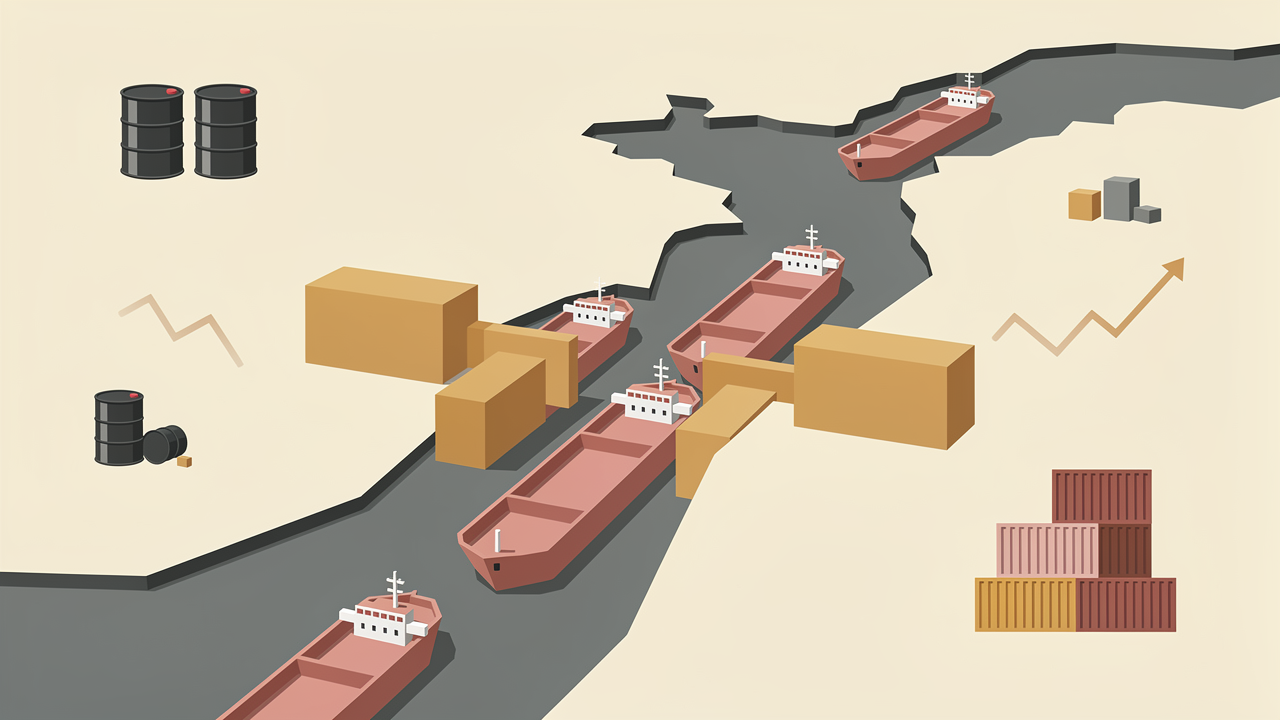
Visiting Washington late last month, German Chancellor Friedrich Merz told reporters the United States was being “humiliated” by Iran, and that the conflict was hurting Europe’s largest economy. The comment, which reflected the view of a leader whose country imports the bulk of its energy from abroad, came as markets absorbed two pieces of news on the same day: the Strait of Hormuz remained almost impassable, and the US was discussing a proposal from Tehran to reopen it. Oil prices steadied after a volatile week. Gold was little changed as traders weighed the same diplomatic signals. The picture was one of fragile equilibrium, with markets uncertain whether the next move is a ceasefire or an escalation that takes the global economy into darker territory.
The Strait of Hormuz, a narrow waterway between Iran and Oman, has been the central choke point of this conflict. Iran’s naval forces, equipped with mines, anti-ship missiles, and small attack boats, have made transit perilous. The US Navy’s Fifth Fleet has struggled to restore safe passage without escalating into a broader naval engagement. The diplomatic picture is no clearer. The US is considering a proposal from Tehran that would involve a mutual de-escalation and the reopening of the Strait under international supervision. But the terms remain murky, and the FT notes European intermediaries have been shuttling between the two capitals with no breakthrough announced.
While that diplomatic process runs its course, markets are adapting. The most visible sign is the redirection of energy supply chains. PetroVietnam Gas JSC, the country’s state-owned gas giant, plans to import more liquefied petroleum gas from the US than from its traditional Middle East suppliers next month. The company expects US cargoes to account for roughly 60% of its LPG imports in May, a shift from practically zero before the conflict. The reason is direct: Middle Eastern LPG, which had been the cheapest option for Vietnamese buyers, is now either unavailable or prohibitively expensive due to war risk premiums and longer alternative shipping routes.
Gold, the traditional hedge against geopolitical risk and inflation, has been a beneficiary. It has rallied to near-record levels, hovering around $2,400 per ounce. But the move has been orderly, not panicked. Traders are pricing in a persistent inflation premium rather than seeking a pure flight to safety. The Hormuz closure and the broader disruption to global energy trade are supply shocks that raise the cost of energy and feed through to the cost of everything that depends on it.
Against this backdrop, the performance of US equity markets has been puzzling. As Bloomberg’s Big Take podcast noted, the S&P 500 has largely shrugged off the war, trading near all-time highs. There are several competing explanations for this disconnect. One is that markets have become desensitized to geopolitical risk after a decade of crises that failed to derail the long bull market. Another is that the impact of the war is concentrated in sectors not heavily represented in the major indices, with energy stocks rallying strongly while tech and consumer discretionary stocks, which dominate the S&P 500, remain relatively insulated. A third, and perhaps most obvious, is that traders are simply betting on a ceasefire.
But there is a danger in this complacency. If the stalemate persists, the economic consequences will become harder to ignore. The longer the Strait remains closed, the more supply chains will need to be permanently rerouted. The longer oil prices stay elevated, the more they will eat into corporate margins and consumer spending power. The longer the diplomatic impasse continues, the greater the risk of a miscalculation that escalates the conflict. The stock market’s current exuberance may be a bet on a quick resolution, but as the war enters its third month with no end in sight, that bet is looking increasingly risky.
For the US, the strategic costs are also mounting. Merz’s comment was pointed, and his government is one of several European allies bearing the brunt of higher energy costs and supply disruptions. The Atlantic alliance, already strained by years of trade disputes and divergent strategic priorities, is under new pressure. The next few weeks will be critical. If the diplomatic push succeeds, markets could see a sharp reversal and a rally in risk assets. If it fails, the cost will be measured not just in barrels of oil or points on the S&P 500, but in the slower growth, higher inflation, and greater uncertainty that will follow.
References
- Oil Steadies as US Weighs Iran Proposal With Hormuz Still Shut — Bloomberg (accessed 2026-04-29)
- Gold Steadies as Traders Weigh Diplomatic Push to End Iran War — Bloomberg (accessed 2026-04-29)
- The Stock Market’s 'Curious Exuberance' Despite the Iran War — Bloomberg (accessed 2026-04-29)
- Vietnam Gas Major Looks to US as Iran War Reorders LPG Flows — Bloomberg (accessed 2026-04-29)
- US being ‘humiliated’ by Iran, says German Chancellor Friedrich Merz — FT (accessed 2026-04-29)
- https://www.theatlantic.com/national-security/2026/04/iran-war-vance-hegseth-trump/686905/ — theatlantic.com (accessed 2026-04-29)
Editor's notes — what this article still gets wrong
Where it lands
The piece does a clean job tying three concrete data points (Vietnam's LPG redirection, gold's orderly climb, the S&P's calm) into a single argument about markets pricing a ceasefire. The Vietnam detail in particular is the kind of specific, sourced fact that earns the broader claim about supply chains rerouting.
Where it falls short
The oil section is thin. We tell readers prices "steadied after a volatile week" without giving a price level, a range, or a comparison to pre-war benchmarks, which is odd in a piece whose central thesis is about energy shock transmission. The framing of Merz is also softer than it should be: quoting "humiliated" approvingly without noting Merz has his own domestic political reasons to pressure Washington lets a loaded line do analytical work it hasn't earned.
What it didn't answer
A fair reader will ask: if the Strait has been shut for weeks, why hasn't the Fifth Fleet reopened it, and what would that operation actually cost? The article gestures at "escalation risk" and moves on. The military question sits underneath every market move described here, and ducking it makes the diplomacy section feel weightless.